HFDS glaucoma surgery
IOP Reduction.
Zero implants.
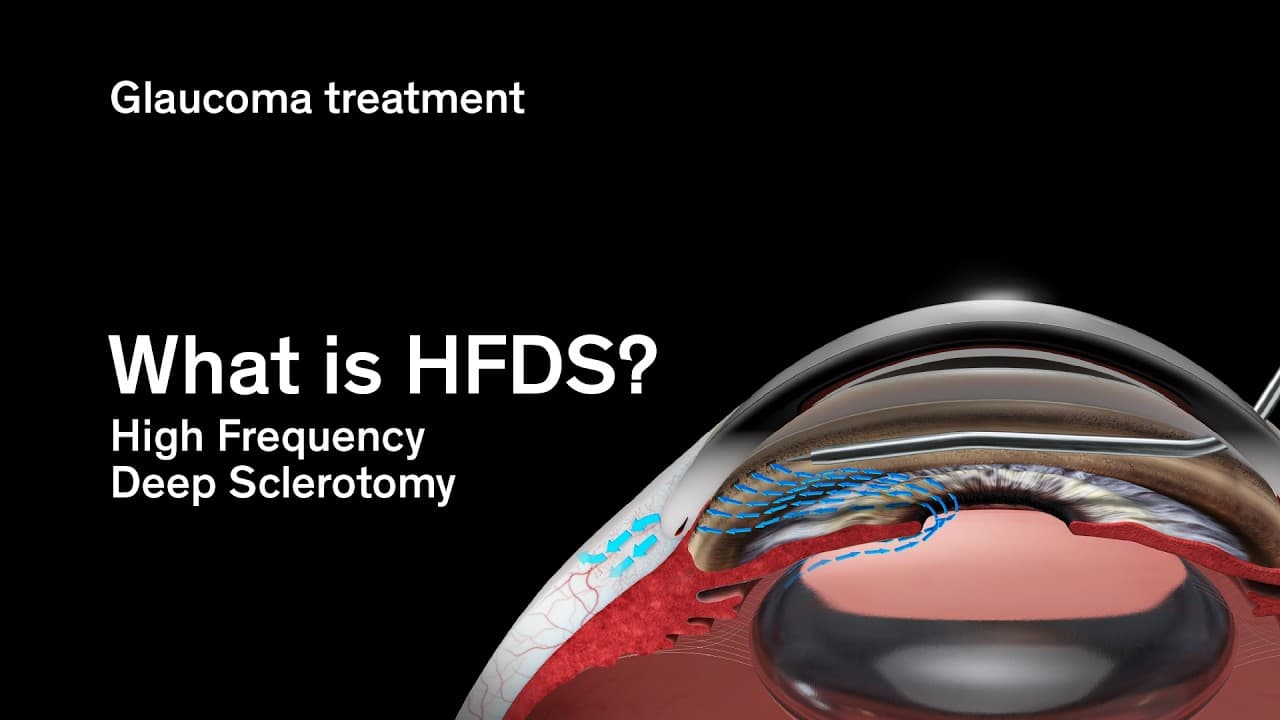
With High Frequency Deep Sclerotomy (HFDS), we offer an implant-free, ab interno procedure for micro-invasive glaucoma surgery (MIGS) to treat primary open-angle glaucoma.



With High Frequency Deep Sclerotomy (HFDS), we offer an implant-free, ab interno procedure for micro-invasive glaucoma surgery (MIGS) to treat primary open-angle glaucoma.


High Frequency Deep Sclerotomy (HFDS) is an implant-free micro-invasive glaucoma procedure that aims to lower intraocular pressure by reducing the outflow resistance of aqueous humour.

Implant-free and micro-invasive:
HFDS aims to improve natural aqueous humour outflow and lower IOP, entirely without the need for permanent implants.
Improved outflow: HFDS provides direct access from the anterior chamber to Schlemm’s canal and further into the sclera, supporting improved aqueous humour outflow and sustained IOP reduction.
Long-term IOP reduction: Clinical studies have confirmed a long-term and significant reduction in IOP over a 4-year period, together with a reduction in anti-glaucoma medications (AGMs) 6.

Stand-alone or combined surgery: HFDS can be combined with cataract surgery or utilised as a stand-alone application 8.


The HFDS glaucoma tip is inserted through a 1.2 mm paracentesis and uses high-frequency diathermy to create six small pockets in the iridocorneal angle. This technique aims to improve natural aqueous humour outflow and lower IOP, entirely without the need for permanent implants.
«HFDS convinces me because the procedure is very easy to perform, highly controllable and with few complications. Thanks to HFDS, excellent long-term results are achieved, resulting in fewer follow-up treatments for patients». D1
Dr Lutz Blomberg
Eye Centre Hildesheim-Alfeld, Germany


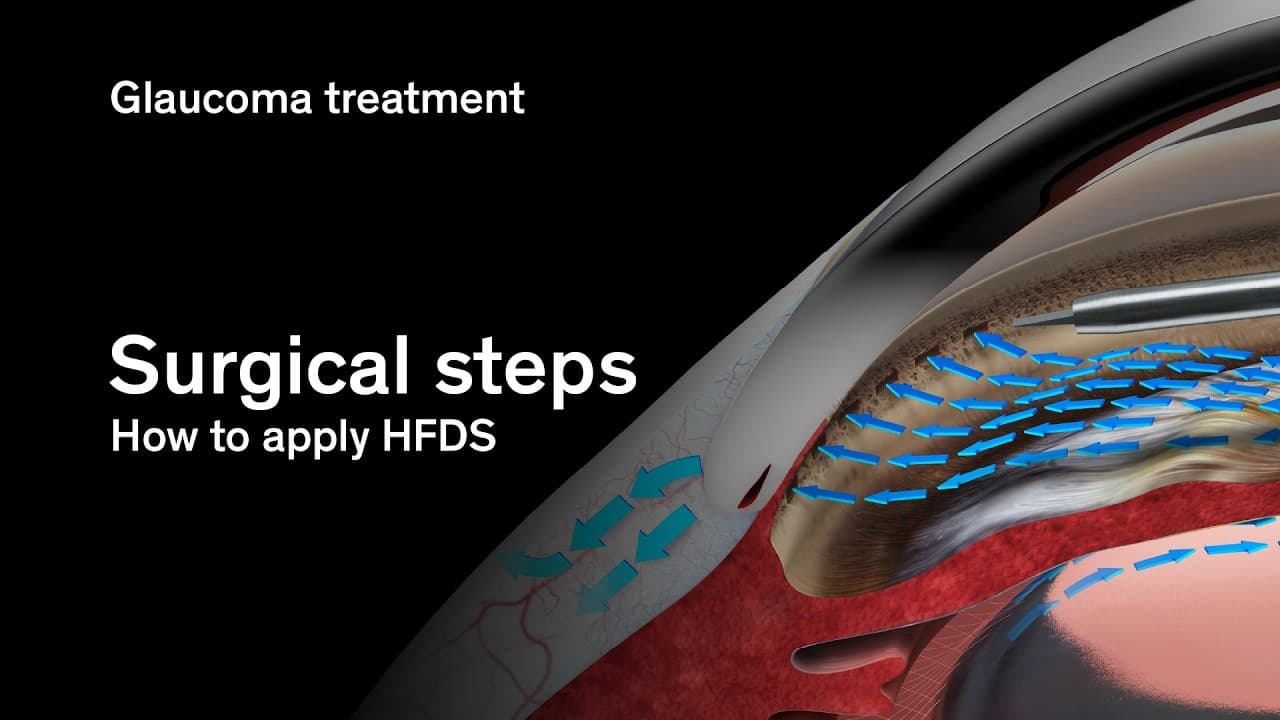
Tilt the patient’s head by 35° and tilt the microscope to ensure optimal visibility of the iridocorneal angle.

The HFDS procedure can be carried out under local anaesthesia. A viscoelastic substance is applied to the cornea to ensure constant moistening.

For nasal access, perform a 1.2 mm temporal or bitemporal incision.

Narrow the pupil using drops or an intracameral injection to protect the lens and improve visualisation of the angle.

Fill the anterior chamber with a high-viscosity viscoelastic substance (OVD) to maintain space and stabilise the target area.

The HFDS glaucoma tip is inserted through the incision and positioned at the desired point of application.

Apply viscoelastic substance to the cornea. Place a direct or indirect goniolens. This allows for a clear view of the Schalbe's line and the pigmented trabecular meshwork.

Position the HFDS tip in the iridocorneal angle below Schwalbe's line and above the scleral spur at the level of the pigmented trabecular meshwork.

Press the pedal and simultaneously push the HFDS tip forward to create a 1 mm pocket. Using high-frequency energy, six small pockets are formed.

According to the recommendation of Prof. Bojan Pajic, it is advised to use Tobramycin/Dexamethasone, either as a fixed combination or separately, four times daily for four weeks, supplemented by Pilocarpine 2 % eye drops for two weeks.
«Thanks to the modern HFDS method from Oertli, I am able to work quick and safe with little effort. It is also a good alternative to implants or filter surgery. The result speaks for itself - many patients are well regulated even after months without glaucoma drops».D1
Dr Hans-Joachim Hettlich
Eye Practice Clinic Minden, Germany

In the treatment of primary open-angle glaucoma, Oertli’s HFDS ab interno MIGS technology delivers promising long-term results in reducing IOP. Clinical studies have confirmed a long-term and significant reduction in IOP over a 4-year period, together with a reduction in anti-glaucoma medications (AGMs)5 6.


Don't guess which platform fits your OR. Answer 5 questions and discover your perfect match in under a minute.


